Velvety • Fragrant • Sunny
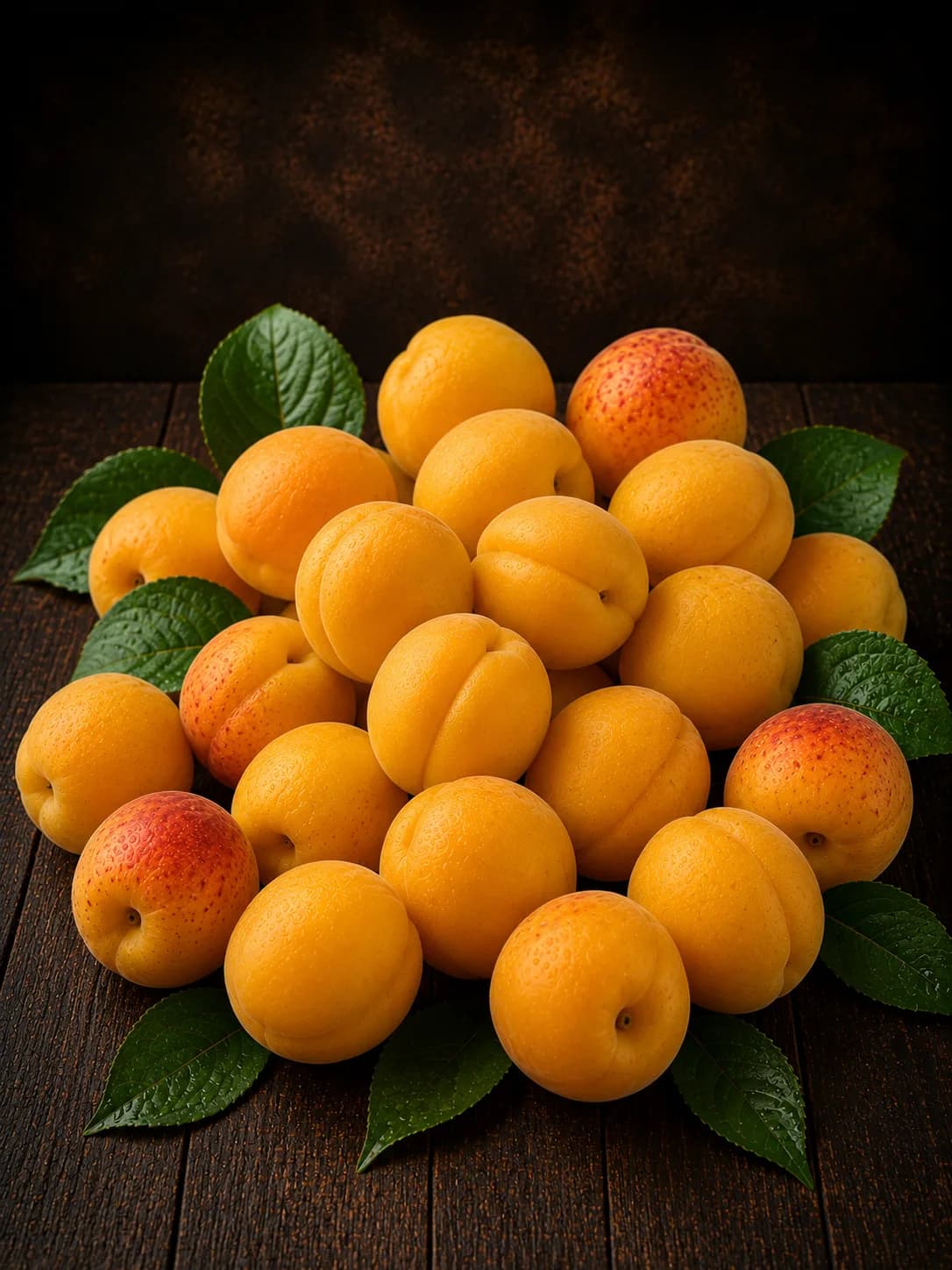
Character Apricots are one of the most emotional fruits of early summer. Their tender sweetness, light acidity, and floral-honey aroma simultaneously create a feeling of lightness and ripeness.
Flavor Profile Sweet • Lightly acidic • Honey-like • Floral
Key Benefits
Natural source of provitamin beta-carotene
Source of antioxidant carotenoids
Natural source of fiber
Potassium-containing fruit
Vitamin source
Low-calorie seasonal fruit
Nutritional Value - 100g
Calories: Approximately 48 kcal
Carbohydrates: 11.1 g
Natural sugars: 9.2 g
Fiber: 2.0 g
Protein: 1.4 g
Fat: 0.4 g
Main vitamins: Provitamin A (beta-carotene), C, E, B3
Main minerals: Potassium, phosphorus, calcium, magnesium
When to Choose
For breakfast
For a light snack
For cheese boards and salads
For desserts and baking
For jams and preserves
Who It Is For
Lovers of seasonal fruit
Children
Fans of delicate and aromatic flavors
Culinary experimentation enthusiasts
Season Late May – July
In Dark Story’s Selection Georgian seasonal apricots are a velvety discovery of early summer—fragrant, juicy, and selected at exact ripeness, featuring a balanced touch of tender sweetness and light acidity.
Lifestyle
Sleep: Neutral
Sports: Friendly
Weight control: Friendly
Alcohol: Friendly
Children: Strong friend
Medications: No widely known significant interactions; follow a doctor's advice in case of individual restrictions.
Exercise Caution
Do not consume the kernel inside the pit
If you have an allergy to stone fruits
When monitoring sugar intake—consider the quantity
Pairs Well With Yogurt • Soft cheese • Pistachios • Almonds • Honey • Vanilla
How to Choose
Pronounced natural aroma
Rich yellow-orange tone
Slight elasticity upon gentle pressure
Healthy, undamaged, and unwrinkled skin
Do not rely solely on red coloration
How to Store
At room temperature: Approximately 1–2 days until ripe
In the refrigerator (when ripe): Approximately 3–5 days
Dark Story Insight
When evaluating apricots, most people first look at color and size. However, the true quality of a great apricot is read through its aroma, the correct firmness of the pulp, and the balance of sweetness and acidity. Very firm and odorless apricots often look beautiful, but fail to develop their full flavor.
Interesting Fact
The botanical name for apricot, Prunus armeniaca, historically reflects its association with Armenia. The apricot is a close relative of the peach, plum, cherry, and almond. Its orange coloration is primarily driven by carotenoids.
Dark Story Selection Advice
For us, the primary value of an apricot is not just sweetness. A proper apricot preserves vibrant acidity and a true floral fragrance alongside its sweetness. A pronounced aroma near the stem, slight elasticity, and undamaged skin are the best practical signs of quality. You should feel a good apricot first—and taste it only afterward.
Continue Reading